Able

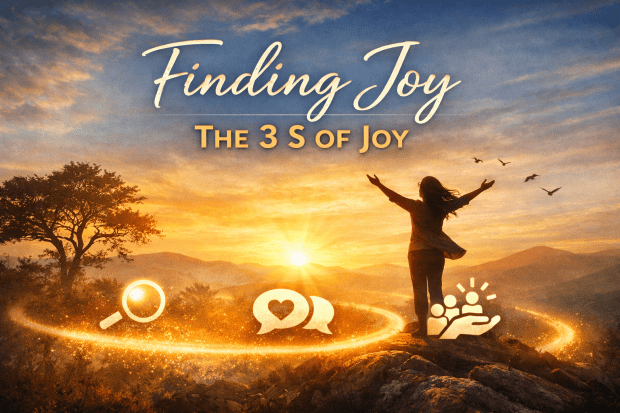
Finding Joy: The 3 S of Joy

There was a season in my life when the word joy felt almost inappropriate.

Not because I didn’t believe in it, but because I couldn’t reconcile it with what I was living.

In a short span, I lost my godmother. The very woman who anchored me emotionally and spiritually, my moral compass and greatest cheerleader, irrespective of the season of life, through both valleys and mountaintops. The kind of person whose voice steadies your nervous system before you even realize you’re shaking. Around the same period, I underwent an excruciating knee surgery that left me limited, dependent, and humbled in ways I never anticipated. Then came the layoff. A clean, corporate sentence that landed like a personal earthquake.

Grief. Pain. Uncertainty. Identity shock.

If you’ve ever had multiple losses arrive as a convoy, you know the particular disorientation it creates. You are not merely “down.” You are trying to understand where you stand when the ground itself has shifted.

That season taught me something our professional culture often treats as optional: happiness and joy are not the same thing. And for business leaders, consultants, and professionals, people who build outcomes, manage expectations, and carry responsibility, confusing the two can quietly cost us our wellbeing, our judgment, and our long-term effectiveness.

Happiness tends to be tethered to circumstances. It is frequently the emotional dividend of things going well around us: a promotion, a contract win, an applauded presentation, a quarter that closes strong, a client renewal, a project milestone that finally lands. Happiness is real, and it matters. But it is also, by design, situational and transient.

Joy is something entirely different. Joy is finding meaning and choosing to remain uplifted despite the disappointments that befall us. It is not about denying reality or indulging in toxic positivity; it is about accessing a deeper wellspring of purpose that sustains you when everything external falls apart. And when people walk away from a well-paying career or even a loving relationship, the turning point is often not a lack of happiness, but a sustained erosion of joy of meaning, connection, and the sense that what they’re doing still matters.

This distinction becomes painfully practical when life does what life does: a lead evaporates, a promotion is denied, a project is cancelled, a client churns, your role is restructured, your health takes a hit, or someone you love is suddenly gone. In those moments, “be happy” is not advice; it’s a misunderstanding.

The question is not, “How do I stay happy when everything hurts?” The question is, “How do I remain whole and upright when disappointment becomes my environment?”

That is what joy offers: an interior posture that does not depend on exterior permission.

What happens when we lose joy

When we operate without joy, we don’t only feel worse. We become less ourselves. We grow cranky, distant, pale in spirit. We begin reacting instead of responding. We withdraw socially and emotionally. And over time, a joyless interior can degrade into regret, misery, anxiety, depression, and the most expensive professional outcome of all: diminished motivation and declining productivity.

Not because we are weak. But because the human system cannot run indefinitely on disappointment, stress, and unprocessed pain.

This is why joy belongs in conversations about careers, business, and performance. Not as a sentimental accessory, but as a strategic necessity.

What Research Tells Us About Joy

Modern research strongly supports what many ancient wisdom traditions already knew: joy and other positive emotions don’t erase hardship, but they meaningfully change our capacity to navigate it. Studies in positive psychology, notably by researchers Barbara Fredrickson, show that positive emotions such as joy expand our cognitive bandwidth. This “broaden-and-build” effect improves problem-solving, resilience, and emotional regulation.

Complementing that, Fredrickson describes the “undoing effect”: positive emotions can speed recovery from the physiological aftereffects of negative emotions (e.g., faster cardiovascular recovery after stress exposure). Chronic stress elevates cortisol levels, weakening immune response and slowing healing. Conversely, practices associated with joy, gratitude, optimism, and social connection have been linked to lower inflammation, improved cardiovascular health, and faster recovery from illness or surgery.

When we are in a state of stress or sadness (the “survival” mode), our brains undergo “tunnel vision.” We focus only on the threat. However, when we intentionally cultivate joy, our peripheral vision—both literal and figurative—expands. We become more creative, more collaborative, and better at complex problem-solving.

Joy is quite literally an ROI positive asset.

The 3 S’s of Joy: A Practical Framework

During one of my darkest periods, I came to understand that joy is not something you wait for or stumble upon when circumstances improve; it is something you construct deliberately, often in the midst of uncertainty. When life is unravelling, inspiration alone is insufficient; you need a practical way to steady yourself. That was the beginning of joy returning, not as a feeling, but as a framework. And that framework is what I now call the 3 S of Joy.

Seek It (Intentionality)

Joy doesn’t just knock on your door. You have to be intentional. In business, we are intentional about our calendars, our budgets, and our networking. We must be equally intentional about our joy. Joy requires intentionality. It won’t magically appear when life gets easier; you have to actively pursue it, especially in difficult seasons.

  • The “Gratefulness Audit”: This is more than just a list; it’s a strategic inventory. During my recovery, I started each morning writing three specific, granular things I was grateful for. Not “my family,” but “the way the morning light hit the wall at 7 AM” or “the specific encouragement my physical therapist gave me.
  • Mindful Reflection: Spend 10 minutes each evening asking: “Where did I experience meaning today?” Even if the day was a disaster, did you learn something? Did you show up for someone else? Meaning doesn’t require magnitude; it requires attention. Focus on those micro-wins, especially when the big goals feel out of reach, and seek joy in the small ones. Finishing a difficult email, a 10-minute walk, or a great cup of coffee.
  • Narrative Reframing: Instead of “I’m unemployed,” I practiced saying, “I have the rare space to reassess my direction.” This isn’t denial, it’s choosing which truth to center. Instead of saying, “I lost this contract,” say, “I have now freed up capacity for a client who values my expertise more.”

Speak It (The Power of Narrative)

Our words create our worlds. Your body language and internal monologue must align with your ideal outlook, not just your current situation. If you speak the language of defeat, your brain will find more evidence for defeat.

  • Verbal Affirmations: I created statements that acknowledged reality while asserting meaning: “This is a difficult season, and I am capable of navigating it.” Research in positive psychology demonstrates that verbal affirmations activate reward centers in the brain and reduce stress responses.
  • The “Transition” Language: When people asked how I was doing, instead of listing my problems, I’d say, “I’m in a transition period that’s teaching me a lot about resilience.” This emphasizes growth over victimhood without being dishonest.
  • Physiological Alignment: Even when I felt defeated, I practiced sitting up straighter and smiling during phone calls. Amy Cuddy’s research on embodied cognition shows that our physical posture influences our emotional state. If you adopt an upright, attentive posture, you signal your brain to feel more focused and expectant of a positive outcome.

Spread It (The River vs. The Reservoir)

You cannot be truly whole while those around you are suffering. Joy is not a reservoir to be hoarded; it is a river that must flow. When you allow your joy to flow to others, it creates a feedback loop that sustains you.

  • Practice Generous Attention: In meetings, give people your full, undistracted presence. In our fragmented economy, this is a rare gift that generates immediate joy for both parties. This is something I am still struggling with due to other issues, but I have seen improvements by being intentional and disciplined.
  • Radical Recognition: Acknowledge someone’s contribution publicly. Research by Adam Grant and Francesca Gino at Wharton shows that when leaders express gratitude to their teams, team productivity spikes significantly. Appreciate your partner, employees, and friends more, and you will see results.
  • Share Resources Freely: Don’t hoard knowledge or connections. When you spread joy through generosity, you reinforce your own sense of abundance rather than scarcity.

The Compounding Returns of Joy
The world is full of surprises, struggles and suffering. Here’s what that brutal season taught me: joy isn’t a luxury reserved for “good times.” It’s a survival kit for navigating life’s inevitable volatility. Joy doesn’t exempt us from struggle; it helps us find purpose within it and move forward with clarity. It strengthens wellbeing, widens perspective when pressure narrows it, and fuels resilience when the demands are high. In Finding Nemo, when fear says “freeze,” Dory’s “just keep swimming” becomes a philosophy of forward motion. Joy allows us to push forward.

 You can’t control the market, the layoff, the missed promotion, the client that walks away, or the injury that slows you down. So if you’re navigating a difficult chapter, personally or professionally, consider this: You don’t need perfect circumstances to experience joy. You need meaning. You need intention. You need posture. You need Joy: Choose to Seek it. Speak it. Spread it.

References

Cuddy, A. J. C., Wilmuth, C. A., & Carney, D. R. (2012). The benefit of power posing before a high-stakes social evaluation. Harvard Business School. (Explores the link between physical posture and emotional/mental performance).

Grant, A. M., & Gino, F. (2010). A little thanks goes a long way: Explaining why gratitude expressions motivate prosocial behavior. Journal of Personality and Social Psychology. (Proves that expressing gratitude leads to massive spikes in productivity).

Fredrickson, B. L. (2001). The role of positive emotions in positive psychology: The broaden-and-build theory of positive emotions. American Psychologist. (The foundational theory on how joy broadens our mental capacity).

The Burden of Man

What is a man?
A job that you didn’t apply for
A job that you don’t take vacation
A job that hurts and breaks
A thankless job

You sacrifice your life
You sacrifice your time
You sacrifice your patience
You sacrifice your peace
And yet it’s never enough

You must learn the way of pain,
Knowing pain, you must learn quickly
Pain birth you, pain demands you
Run, fly… but no one escapes pain
Make peace; pain does not care

A man with many faces
One day you get to be angel,
Another day, you are a savage
One day you are a peacemaker,
Another day, you are trouble

A man without empathy
A man without ethics
A man who lacks economics
A man who lacks emotions
That man is not a made man

No one owes you anything
Yet, you owe your life
Yet, you owe your time
Yet, you owe your strength
To a world that keeps taking

You will understand quickly –
Pain is real
Failure is a teacher
Power is corrupt
Purpose is the only explanation

Other men have suffered before you
Other men are suffering now
Other men will suffer then
Know this, know peace
The curse of suffering continues

There is always a man out there –
Hoping to take what is yours
Wanting to use you
Open to betray you
Eager to kill you

I hope one day my young sons-
Ruled by wisdom and strength
Find meaning and their purpose
Understand the burden of a man
And survive this terrible world

The Smell of Jamaica

The smell of Jamaica, dah vibes upon vibes,
whispering through Blue Mountain mist,
where coffee smoke, thick as prophecy,
climbs and curls in ancestral tongues.
It is the incense of emancipation,
the balm of weary feet on Doctor’s Cave sands.

Listen—rocksteady still hums beneath the skin of the island,
reggae beating like heart against rib,
drums telling stories older than empire.
“Out of Many, One People”—
a motto stitched in kente and calypso,
where ackee and saltfish simmer
beside the laughter of children,
their mouths red with sorrel, sweet and sharp.

Jah love walks barefoot
down Seven Miles of Negril,
waves clapping like tambourines
to the rhythm of the doctor bird,
its tailstream painting gospel in the air.
Here, the carnival is no costume only,
but the sacred right of joy,
a luxury of freedom seized from chains,
spilled into song, into dance, into flesh.

O Cuba, O Haiti, O Florida shores—
hear the island breathing,
a harbour of delights,
sun-drenched and unbroken.
Resorts bustle, yes,
but beneath them, the roots—
maroon drums, nyabinghi chants,
voices like Hughes’ rivers,
deep, dark, eternal.

For the smell of Jamaica is not tourist perfume,
but fire and frankincense,
rum and bob marley drink,
a pungent promise of peace and love,
the slow burn of ganja wisdom,
and the urgency of rights restored.

Beyond the bustle of resorts and guaranteed sunshine,
the island breathes deeper—
lush vegetation, roots older than empire,
branches bent but never broken.
Here, soil remembers maroon footsteps,
chants rising like smoke to the stars.

The smell of Jamaica is not tourist perfume.
It is ancestral incense,
ganja’s bitter-sweet prayer,
salt air singing through coral reefs,
children’s voices rising like hymns of dawn.
Every drumbeat, every laugh, every tear
is a psalm fi survival,
a poem fi peace.

Yes, Jamaica nah just a place,
she a spirit, she a living word.
She smell of resilience and rhythm,
she taste of rain and redemption.
I and I say—
one love,
one people,
one sound,
ever blessed, ever irie,
Jah guide di land of vibes upon vibes.

Today is Today

Today drips like ripe fruit,
crushed beneath the feet of kings and beggars alike.
There are laughters—wild, like tambourines in drunken alleys.
There are cries—long, like cathedrals echoing prayers that rot.
Today is today—
no mask, no mercy.

Somewhere, a woman breathes peace into her child’s soft hair,
Elsewhere, bones rattle beneath the boots of men with metal hearts.
Freedom dances barefoot in one square—
In another, a soul is shackled for dreaming.
Today is today—
a coin flipped by invisible gods.

Each sunrise is a loaded gun—
pointed at luck, or loss.
Some sip wine with trembling lips and call it survival.
Others bleed, silently, into clean white sheets.
Today is today—
the blade and the balm.

Alive—yes, the earth still spins
in her dress of dust and fire.
Life kisses us, bites us, forgets us.
But still,
Today is today—
undeniable, holy,
and cruel as love.

Bridging the Digital Divide in Canadian Healthcare: A Vision for Connected Care

Canada’s healthcare system is often lauded for its universality, but beneath the surface lies a fragmented system plagued by inefficiencies, long wait times, and interoperability gaps. These challenges not only strain healthcare providers but also compromise patient outcomes. Currently, the statistics paint a sobering picture: the median wait time between referral from a general practitioner to specialist treatment has reached 27.7 weeks – over half a year of waiting in uncertainty. Nearly 6.5 million Canadians lack a regular healthcare provider, and medical errors contribute to 28,000 deaths annually, with a significant portion attributed to incomplete patient histories, shocking reality that underscores the urgent need for a technological transformation in healthcare.

But what if we could transform this landscape through a unified, secure digital health platform? Imagine a system as familiar and accessible as your CRA account, but designed to revolutionize healthcare delivery.

The Challenge: A Fragmented System

Our current healthcare infrastructure operates in silos. A patient in Vancouver cannot easily share their medical history with an emergency room in Toronto. A specialist in Montreal might prescribe medication without knowing about allergies documented by a family doctor in Calgary. This fragmentation not only compromises patient care but also leads to:

  • Duplicate testing (estimated cost: $3.2 billion annually)
  • Preventable adverse drug reactions (affecting 1.5 million Canadians yearly)
  • Extended hospital stays due to incomplete medical histories
  • Critical delays in emergency care delivery

The root of many of these issues lies in the lack of a unified, portable, and accessible healthcare record system. Imagine a world where every Canadian has an accurate Best Possible Medication History (BPMH), a comprehensive digital health record that tracks every vaccination, prescription, blood test, diagnosis, specialist visit, and surgery from birth to the present. This record would be accessible to any healthcare provider across the country, ensuring that no matter where you are, your medical history is always at your fingertips. Such a system would drastically reduce wait times, minimize medical errors, and ensure that every patient receives the most effective, personalized care possible.

A Bold Solution: An AI-Driven Healthcare Ecosystem

I propose an AI-powered, interoperable health information platform that serves as a single source of truth for patient care across the country. This AI-driven system would function as a federated health network, much like the Canada Revenue Agency (CRA) authentication system, using the same robust authentication protocols. Users could log in securely, giving healthcare providers permission to access their data on demand on a token-based approval, aligned with relevant privacy and data protection laws.

Here’s how it would work:

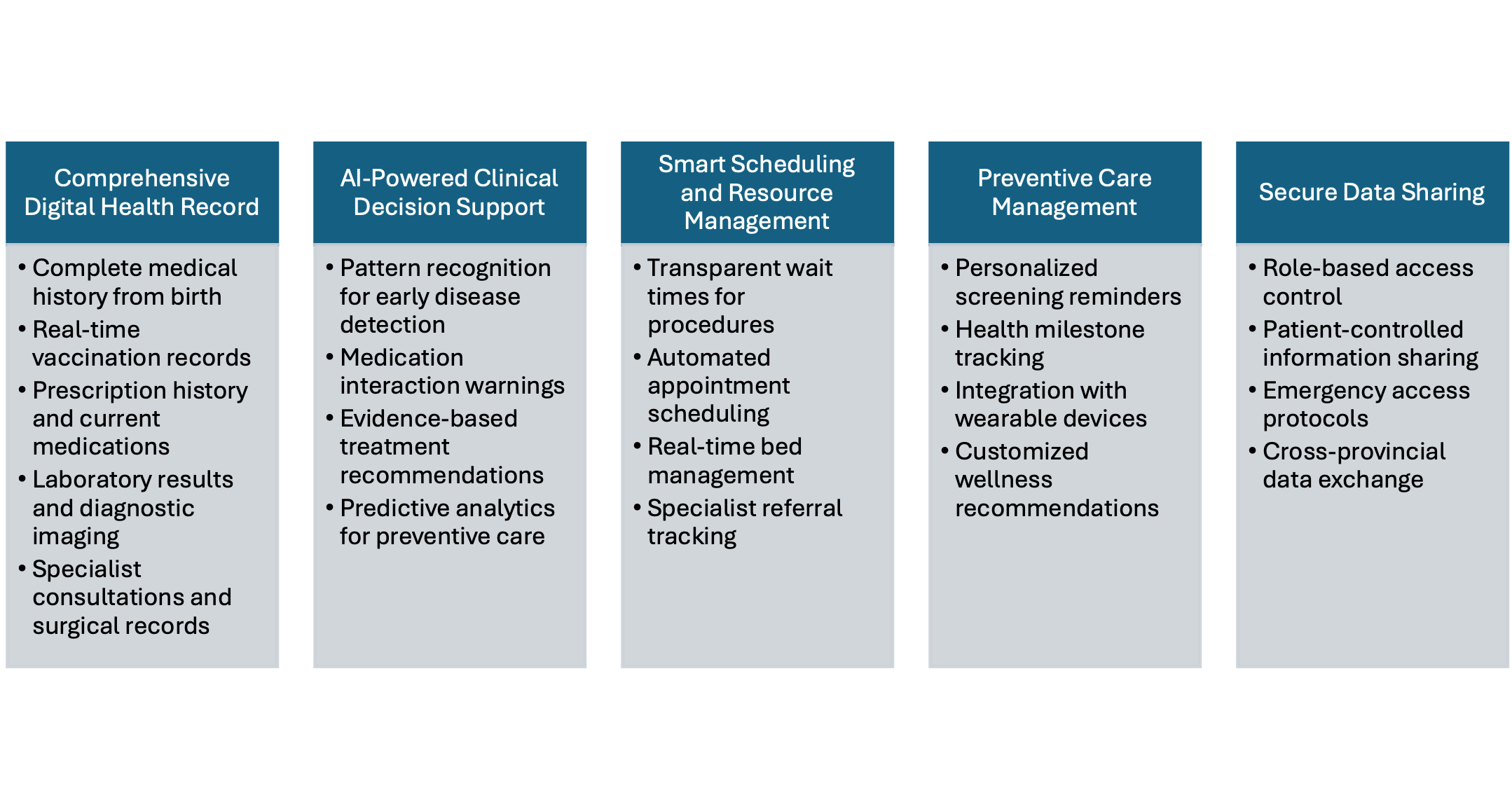
  1. Comprehensive Health Records: Every Canadian would have a digital health profile that includes their BPMH, updated in real-time. This profile would integrate data from hospitals, clinics, pharmacies, and even wearable devices like Apple Watches and Fitbits. Whether you’re visiting a family doctor in Toronto or an emergency room in Vancouver, your complete medical history would be instantly accessible.
  2. AI-Driven Precision Medicine: The platform would use AI to analyze patient data and provide evidence-based recommendations to healthcare providers. For example, based on your medical history and current vitals, the system could suggest the most effective treatments, flag potential drug interactions, or recommend preventive screenings. This would empower doctors to make faster, more informed decisions, reducing diagnostic errors and improving patient outcomes.
  3. Proactive Health Management: The platform would include a patient-facing dashboard that sends personalized notifications for routine check-ups, vaccinations, and screenings (e.g., annual eye exams, Pap tests, or prostate exams). It could also offer tailored recommendations for diet, fitness, and lifestyle changes based on your health profile. Imagine receiving a notification reminding you to update your height or weight, or prompting you to schedule a flu shot—all in one place.
  4. Seamless Integration: The platform would integrate with existing systems like DPIN (Drug Programs Information Network), hospital scheduling systems, and referral networks. For instance, it could auto-generate prescriptions for prescribers to review and modify or streamline the referral process for specialists like orthodontists or dermatologists. It would also enhance transparency by providing real-time updates on wait times for surgeries, transplants, or diagnostic tests.  The system would interface with other systems such as provincial health insurance systems, Hospital EMR systems, pharmacy management systems, laboratory information systems, and medical imaging networks.
  5. Enhanced Accessibility and Portability: By linking the platform to provincial health cards, Canadians would have instant access to their health records wherever they go. This would be particularly beneficial for travelers, newcomers, or those relocating between provinces. No more filling out redundant forms or repeating tests—your health history would follow you, ensuring continuity of care.

The Impact: A Healthier Canada

The benefits of such a system are profound. For patients, it means shorter wait times, fewer medical errors, and more personalized care. For healthcare providers, it means reduced administrative burden, improved decision-making, and better resource allocation. For the system as a whole, it means cost savings, increased efficiency, and enhanced patient satisfaction.

Consider the following potential outcomes:

  • A 30% reduction in wait times due to streamlined processes and reduced administrative delays.
  • A 20% decrease in medical errors thanks to comprehensive, up-to-date patient records.
  • Improved patient outcomes through precision medicine and proactive health management.

Real-World Application

Consider Sarah, a Winnipeg resident experiencing chest pain while visiting family in Halifax. Under the current system, emergency room staff would have limited access to her medical history. With this tool, doctors would instantly access her complete cardiac history, current medications, recent test results, and relevant family history – enabling faster, more accurate diagnosis and treatment.

The Path Forward

Creating this unified health information system requires collaboration between federal and provincial governments, healthcare providers, and technology partners. While the initial investment would be substantial, the long-term benefits in improved patient outcomes, reduced healthcare costs, and enhanced system efficiency would far outweigh the implementation costs.

We have the technology. We have the expertise. What we need now is the collective will to transform Canadian healthcare through digital innovation. Let’s work together to create a connected healthcare system that serves all Canadians, regardless of where they live or seek care.

The Little Guy

The little guy finds a family.
He found trouble at a young age.
He was mocked for his looks.
He was ignored as a middle child.
Who is looking out for the little guy?

He managed to attend school.
He was in pain, but no one cared.
He was ridiculed every recess.
He was bullied for being different.
Who is looking out for the little guy?

He started to become a man.
He was expected to show, but no one showed.
Adolescence caught up with him, but he was behind.
He had a gift no one wanted.
Who is looking out for the little guy?

He became the family diamond—
All bright, but no one wanted him to shine.
He was used, and only one cared.
The one who cared passed to glory.
Who is looking out for the little guy?

He became a family man.
He was working; he was adulting.
He thought he had found his heart of gold.
But all that glitters is not gold.
Who is looking out for the little guy?

He is wrestling with life—
Pain upon pain,
Distress upon distress,
Trouble upon trouble.
Who is looking out for the little guy?

The little guy hears the noise.
The little guy feels the betrayal.
The little guy knows the pain.
The little guy shows up anyway.
Who is looking out for the little guy?

The little guy is abused.
The little guy suffers.
The little guy struggles.
The little guy accepts fate.
Who is looking out for the little guy?

No one cares to hear the little guy.
No one tries to help the little guy.
No one wants to love the little guy.
No one dares to know the little guy.
No one is looking for the little guy.

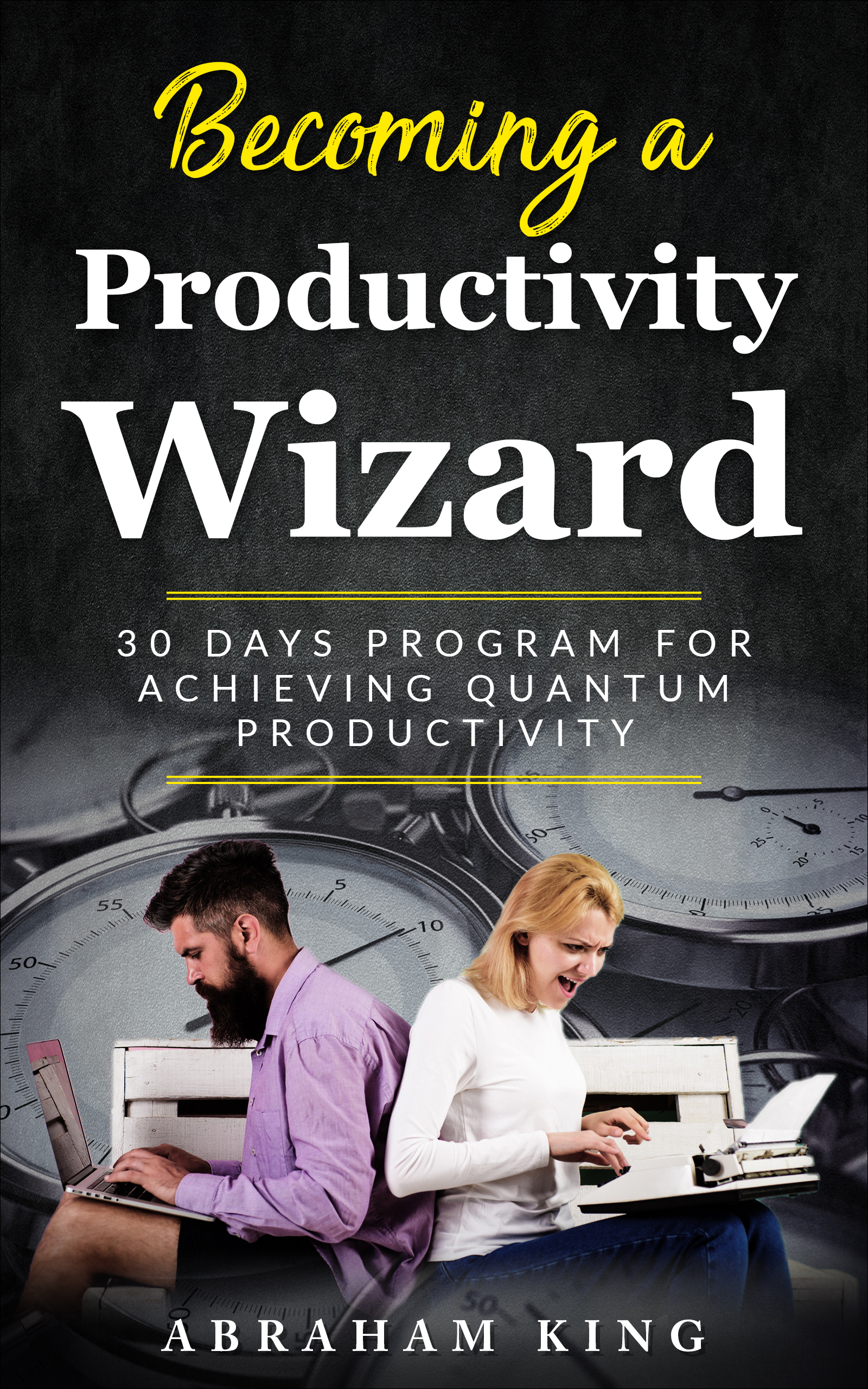
Unlock Your Full Potential with Becoming a Productivity Wizard

Are you ready to achieve quantum productivity and transform your life in just 30 days? My new book, Becoming a Productivity Wizard: 30 Days Program for Achieving Quantum Productivity, is your step-by-step guide to unparalleled personal growth and productivity.

Why I Wrote This Book

As a business professional, instructor, and productivity enthusiast, I’ve always believed that productivity isn’t just about getting more done—it’s about doing the right things effectively while staying true to yourself. This book reflects years of experience and proven strategies designed to help you overcome challenges, eliminate distractions, and build a life you truly love.

A 30-Day Journey to Productivity Mastery

The book is broken into five transformative parts that take you from self-discovery to mastery:

1. Discovery: Dive deep into self-awareness. Reflect on who you are, your strengths, and how you can align them with your productivity goals.

2. Excision: Identify and remove what’s holding you back—negative influences, distractions, and unproductive habits.

3. Reincarnation: Rebuild your life with intentional actions and habits. This is where the magic of goal setting, time management, and planning begins.

4. Ritual: Create powerful daily and weekly routines that foster sustained success. Discover how consistency can revolutionize your life.

5. Enchantment: Refine your strategies to maintain a high level of productivity while ensuring alignment with your core values.

Why Becoming a Productivity Wizard Stands Out

  • Practical Exercises: Each chapter includes actionable steps tailored to help you apply the concepts directly to your life.
  • Holistic Approach: This book doesn’t just focus on your work life—it helps you balance personal growth, health, and relationships.
  • Transformative Insights: Whether you’re looking to enhance your career, personal life, or overall well-being, the tools in this book will guide you to success

Who Is This Book For?

If you’ve ever felt stuck, overwhelmed, or unsure of how to move forward, this book is for you. From students and professionals to entrepreneurs and parents, anyone looking to unlock their potential can benefit from this program.

Ready to Start Your Transformation?

Grab your copy of Becoming a Productivity Wizard: 30 Days Program for Achieving Quantum Productivity here. Start your 30-day journey to discovering your true potential and achieving quantum productivity.

Let’s make productivity not just a practice but a lifestyle.

Stay tuned for more insights, tips, and success stories from readers who’ve transformed their lives with this program!

#ProductivityWizard #QuantumProductivity #PersonalGrowth

Ten Ways To Improving Your Relationship

Relationship

The beautiful thing about life is that we can share our entire life with the love of our life. Relationship often goes in cycle and needs to be balanced to have continuity. What and who is most important person in our life will drive the need to have a relationship in the first place. As all relationship, for it to work, we must be working at it constantly. Not on valentine day, anniversary day, desperate days, good or bad days but every day. No matter how great a relationship is every relationship always has an area of improvement. Below I briefly highlight ten ways to improving a relationship; (more…)

Let’s Have A Lot of Sex

sex sex sex

Let’s have a lot of sex but a promising one

Let’s have a lot of sex but a feel good sex

Let’s have a lot of sex but not a feel bad sex

Let’s have a lot of sex but a win-win sex (more…)

A Guy’s Game Point on First Date

FD

Credit: Shutterstock

Last night I went to a Thai restaurant with my project team. It was one of the first of many outings we planned to kick off the holiday celebration. This particular restaurant in the exchange district was plan B, everyone’s favorite was closed for the holidays. At least some of my team members have been to this place and they think it offers similar experience. I was the last guy to join the team as I was running status report for end of day. I walked in 30 minutes late and thought people would have placed order but to my surprise they are still waiting for an attendant to take their orders. Nevertheless, we pre-booked earlier and confirmed our reservation.

Shortly the attendant came by to take orders and apologized for the lackluster customer service. We all took our orders. I ordered shrimp rolls and the Vietnamese pho with 10/10 spice. And there we are, chatting and exchanging friendly vibes expecting orders to come by at most in 30 minutes. To our utmost surprise, we did not have orders fulfilled until 90 minutes later. I was dying of hunger, the vibes were not sufficient to harness those pangs in my stomach. (more…)