
There was a season in my life when the word joy felt almost inappropriate.
Not because I didn’t believe in it, but because I couldn’t reconcile it with what I was living.
In a short span, I lost my godmother. The very woman who anchored me emotionally and spiritually, my moral compass and greatest cheerleader, irrespective of the season of life, through both valleys and mountaintops. The kind of person whose voice steadies your nervous system before you even realize you’re shaking. Around the same period, I underwent an excruciating knee surgery that left me limited, dependent, and humbled in ways I never anticipated. Then came the layoff. A clean, corporate sentence that landed like a personal earthquake.
Grief. Pain. Uncertainty. Identity shock.
If you’ve ever had multiple losses arrive as a convoy, you know the particular disorientation it creates. You are not merely “down.” You are trying to understand where you stand when the ground itself has shifted.
That season taught me something our professional culture often treats as optional: happiness and joy are not the same thing. And for business leaders, consultants, and professionals, people who build outcomes, manage expectations, and carry responsibility, confusing the two can quietly cost us our wellbeing, our judgment, and our long-term effectiveness.
Happiness tends to be tethered to circumstances. It is frequently the emotional dividend of things going well around us: a promotion, a contract win, an applauded presentation, a quarter that closes strong, a client renewal, a project milestone that finally lands. Happiness is real, and it matters. But it is also, by design, situational and transient.
Joy is something entirely different. Joy is finding meaning and choosing to remain uplifted despite the disappointments that befall us. It is not about denying reality or indulging in toxic positivity; it is about accessing a deeper wellspring of purpose that sustains you when everything external falls apart. And when people walk away from a well-paying career or even a loving relationship, the turning point is often not a lack of happiness, but a sustained erosion of joy of meaning, connection, and the sense that what they’re doing still matters.
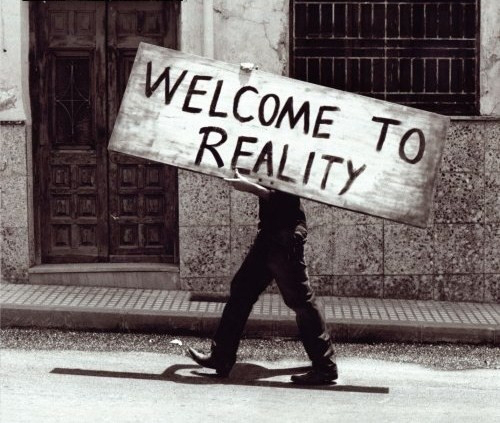
This distinction becomes painfully practical when life does what life does: a lead evaporates, a promotion is denied, a project is cancelled, a client churns, your role is restructured, your health takes a hit, or someone you love is suddenly gone. In those moments, “be happy” is not advice; it’s a misunderstanding.
The question is not, “How do I stay happy when everything hurts?” The question is, “How do I remain whole and upright when disappointment becomes my environment?”
That is what joy offers: an interior posture that does not depend on exterior permission.
What happens when we lose joy
When we operate without joy, we don’t only feel worse. We become less ourselves. We grow cranky, distant, pale in spirit. We begin reacting instead of responding. We withdraw socially and emotionally. And over time, a joyless interior can degrade into regret, misery, anxiety, depression, and the most expensive professional outcome of all: diminished motivation and declining productivity.
Not because we are weak. But because the human system cannot run indefinitely on disappointment, stress, and unprocessed pain.
This is why joy belongs in conversations about careers, business, and performance. Not as a sentimental accessory, but as a strategic necessity.
What Research Tells Us About Joy
Modern research strongly supports what many ancient wisdom traditions already knew: joy and other positive emotions don’t erase hardship, but they meaningfully change our capacity to navigate it. Studies in positive psychology, notably by researchers Barbara Fredrickson, show that positive emotions such as joy expand our cognitive bandwidth. This “broaden-and-build” effect improves problem-solving, resilience, and emotional regulation.
Complementing that, Fredrickson describes the “undoing effect”: positive emotions can speed recovery from the physiological aftereffects of negative emotions (e.g., faster cardiovascular recovery after stress exposure). Chronic stress elevates cortisol levels, weakening immune response and slowing healing. Conversely, practices associated with joy, gratitude, optimism, and social connection have been linked to lower inflammation, improved cardiovascular health, and faster recovery from illness or surgery.
When we are in a state of stress or sadness (the “survival” mode), our brains undergo “tunnel vision.” We focus only on the threat. However, when we intentionally cultivate joy, our peripheral vision—both literal and figurative—expands. We become more creative, more collaborative, and better at complex problem-solving.
Joy is quite literally an ROI positive asset.
The 3 S’s of Joy: A Practical Framework
During one of my darkest periods, I came to understand that joy is not something you wait for or stumble upon when circumstances improve; it is something you construct deliberately, often in the midst of uncertainty. When life is unravelling, inspiration alone is insufficient; you need a practical way to steady yourself. That was the beginning of joy returning, not as a feeling, but as a framework. And that framework is what I now call the 3 S of Joy.
Seek It (Intentionality)
Joy doesn’t just knock on your door. You have to be intentional. In business, we are intentional about our calendars, our budgets, and our networking. We must be equally intentional about our joy. Joy requires intentionality. It won’t magically appear when life gets easier; you have to actively pursue it, especially in difficult seasons.
- The “Gratefulness Audit”: This is more than just a list; it’s a strategic inventory. During my recovery, I started each morning writing three specific, granular things I was grateful for. Not “my family,” but “the way the morning light hit the wall at 7 AM” or “the specific encouragement my physical therapist gave me.
- Mindful Reflection: Spend 10 minutes each evening asking: “Where did I experience meaning today?” Even if the day was a disaster, did you learn something? Did you show up for someone else? Meaning doesn’t require magnitude; it requires attention. Focus on those micro-wins, especially when the big goals feel out of reach, and seek joy in the small ones. Finishing a difficult email, a 10-minute walk, or a great cup of coffee.
- Narrative Reframing: Instead of “I’m unemployed,” I practiced saying, “I have the rare space to reassess my direction.” This isn’t denial, it’s choosing which truth to center. Instead of saying, “I lost this contract,” say, “I have now freed up capacity for a client who values my expertise more.”
Speak It (The Power of Narrative)
Our words create our worlds. Your body language and internal monologue must align with your ideal outlook, not just your current situation. If you speak the language of defeat, your brain will find more evidence for defeat.
- Verbal Affirmations: I created statements that acknowledged reality while asserting meaning: “This is a difficult season, and I am capable of navigating it.” Research in positive psychology demonstrates that verbal affirmations activate reward centers in the brain and reduce stress responses.
- The “Transition” Language: When people asked how I was doing, instead of listing my problems, I’d say, “I’m in a transition period that’s teaching me a lot about resilience.” This emphasizes growth over victimhood without being dishonest.
- Physiological Alignment: Even when I felt defeated, I practiced sitting up straighter and smiling during phone calls. Amy Cuddy’s research on embodied cognition shows that our physical posture influences our emotional state. If you adopt an upright, attentive posture, you signal your brain to feel more focused and expectant of a positive outcome.
Spread It (The River vs. The Reservoir)
You cannot be truly whole while those around you are suffering. Joy is not a reservoir to be hoarded; it is a river that must flow. When you allow your joy to flow to others, it creates a feedback loop that sustains you.
- Practice Generous Attention: In meetings, give people your full, undistracted presence. In our fragmented economy, this is a rare gift that generates immediate joy for both parties. This is something I am still struggling with due to other issues, but I have seen improvements by being intentional and disciplined.
- Radical Recognition: Acknowledge someone’s contribution publicly. Research by Adam Grant and Francesca Gino at Wharton shows that when leaders express gratitude to their teams, team productivity spikes significantly. Appreciate your partner, employees, and friends more, and you will see results.
- Share Resources Freely: Don’t hoard knowledge or connections. When you spread joy through generosity, you reinforce your own sense of abundance rather than scarcity.
The Compounding Returns of Joy
The world is full of surprises, struggles and suffering. Here’s what that brutal season taught me: joy isn’t a luxury reserved for “good times.” It’s a survival kit for navigating life’s inevitable volatility. Joy doesn’t exempt us from struggle; it helps us find purpose within it and move forward with clarity. It strengthens wellbeing, widens perspective when pressure narrows it, and fuels resilience when the demands are high. In Finding Nemo, when fear says “freeze,” Dory’s “just keep swimming” becomes a philosophy of forward motion. Joy allows us to push forward.
You can’t control the market, the layoff, the missed promotion, the client that walks away, or the injury that slows you down. So if you’re navigating a difficult chapter, personally or professionally, consider this: You don’t need perfect circumstances to experience joy. You need meaning. You need intention. You need posture. You need Joy: Choose to Seek it. Speak it. Spread it.
References
Cuddy, A. J. C., Wilmuth, C. A., & Carney, D. R. (2012). The benefit of power posing before a high-stakes social evaluation. Harvard Business School. (Explores the link between physical posture and emotional/mental performance).
Grant, A. M., & Gino, F. (2010). A little thanks goes a long way: Explaining why gratitude expressions motivate prosocial behavior. Journal of Personality and Social Psychology. (Proves that expressing gratitude leads to massive spikes in productivity).
Fredrickson, B. L. (2001). The role of positive emotions in positive psychology: The broaden-and-build theory of positive emotions. American Psychologist. (The foundational theory on how joy broadens our mental capacity).








 ablethoughts