Canada’s healthcare system is often lauded for its universality, but beneath the surface lies a fragmented system plagued by inefficiencies, long wait times, and interoperability gaps. These challenges not only strain healthcare providers but also compromise patient outcomes. Currently, the statistics paint a sobering picture: the median wait time between referral from a general practitioner to specialist treatment has reached 27.7 weeks – over half a year of waiting in uncertainty. Nearly 6.5 million Canadians lack a regular healthcare provider, and medical errors contribute to 28,000 deaths annually, with a significant portion attributed to incomplete patient histories, shocking reality that underscores the urgent need for a technological transformation in healthcare.
But what if we could transform this landscape through a unified, secure digital health platform? Imagine a system as familiar and accessible as your CRA account, but designed to revolutionize healthcare delivery.
The Challenge: A Fragmented System
Our current healthcare infrastructure operates in silos. A patient in Vancouver cannot easily share their medical history with an emergency room in Toronto. A specialist in Montreal might prescribe medication without knowing about allergies documented by a family doctor in Calgary. This fragmentation not only compromises patient care but also leads to:
- Duplicate testing (estimated cost: $3.2 billion annually)
- Preventable adverse drug reactions (affecting 1.5 million Canadians yearly)
- Extended hospital stays due to incomplete medical histories
- Critical delays in emergency care delivery
The root of many of these issues lies in the lack of a unified, portable, and accessible healthcare record system. Imagine a world where every Canadian has an accurate Best Possible Medication History (BPMH), a comprehensive digital health record that tracks every vaccination, prescription, blood test, diagnosis, specialist visit, and surgery from birth to the present. This record would be accessible to any healthcare provider across the country, ensuring that no matter where you are, your medical history is always at your fingertips. Such a system would drastically reduce wait times, minimize medical errors, and ensure that every patient receives the most effective, personalized care possible.
A Bold Solution: An AI-Driven Healthcare Ecosystem
I propose an AI-powered, interoperable health information platform that serves as a single source of truth for patient care across the country. This AI-driven system would function as a federated health network, much like the Canada Revenue Agency (CRA) authentication system, using the same robust authentication protocols. Users could log in securely, giving healthcare providers permission to access their data on demand on a token-based approval, aligned with relevant privacy and data protection laws.
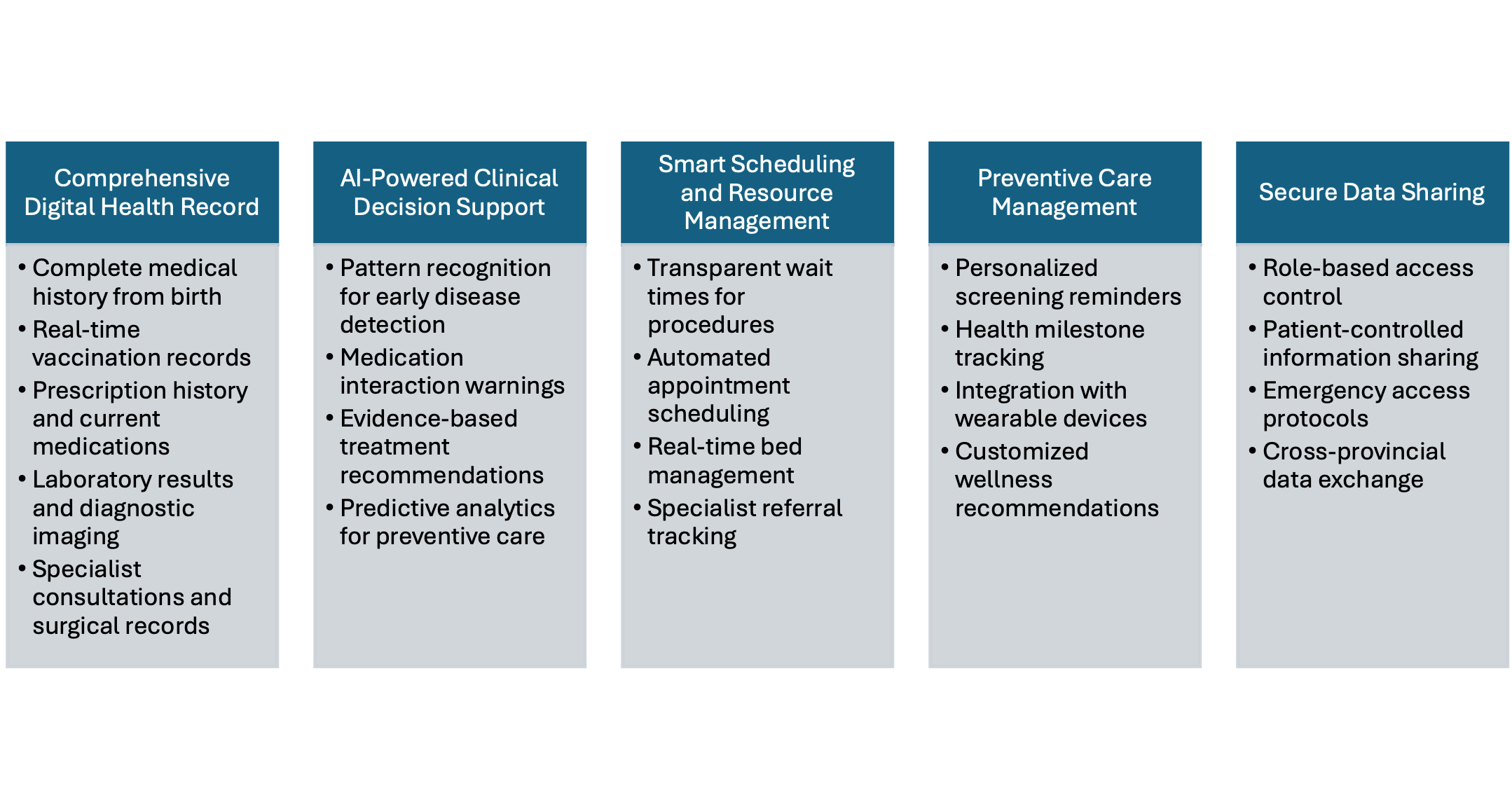
Here’s how it would work:
- Comprehensive Health Records: Every Canadian would have a digital health profile that includes their BPMH, updated in real-time. This profile would integrate data from hospitals, clinics, pharmacies, and even wearable devices like Apple Watches and Fitbits. Whether you’re visiting a family doctor in Toronto or an emergency room in Vancouver, your complete medical history would be instantly accessible.
- AI-Driven Precision Medicine: The platform would use AI to analyze patient data and provide evidence-based recommendations to healthcare providers. For example, based on your medical history and current vitals, the system could suggest the most effective treatments, flag potential drug interactions, or recommend preventive screenings. This would empower doctors to make faster, more informed decisions, reducing diagnostic errors and improving patient outcomes.
- Proactive Health Management: The platform would include a patient-facing dashboard that sends personalized notifications for routine check-ups, vaccinations, and screenings (e.g., annual eye exams, Pap tests, or prostate exams). It could also offer tailored recommendations for diet, fitness, and lifestyle changes based on your health profile. Imagine receiving a notification reminding you to update your height or weight, or prompting you to schedule a flu shot—all in one place.
- Seamless Integration: The platform would integrate with existing systems like DPIN (Drug Programs Information Network), hospital scheduling systems, and referral networks. For instance, it could auto-generate prescriptions for prescribers to review and modify or streamline the referral process for specialists like orthodontists or dermatologists. It would also enhance transparency by providing real-time updates on wait times for surgeries, transplants, or diagnostic tests. The system would interface with other systems such as provincial health insurance systems, Hospital EMR systems, pharmacy management systems, laboratory information systems, and medical imaging networks.
- Enhanced Accessibility and Portability: By linking the platform to provincial health cards, Canadians would have instant access to their health records wherever they go. This would be particularly beneficial for travelers, newcomers, or those relocating between provinces. No more filling out redundant forms or repeating tests—your health history would follow you, ensuring continuity of care.
The Impact: A Healthier Canada
The benefits of such a system are profound. For patients, it means shorter wait times, fewer medical errors, and more personalized care. For healthcare providers, it means reduced administrative burden, improved decision-making, and better resource allocation. For the system as a whole, it means cost savings, increased efficiency, and enhanced patient satisfaction.
Consider the following potential outcomes:
- A 30% reduction in wait times due to streamlined processes and reduced administrative delays.
- A 20% decrease in medical errors thanks to comprehensive, up-to-date patient records.
- Improved patient outcomes through precision medicine and proactive health management.
Real-World Application
Consider Sarah, a Winnipeg resident experiencing chest pain while visiting family in Halifax. Under the current system, emergency room staff would have limited access to her medical history. With this tool, doctors would instantly access her complete cardiac history, current medications, recent test results, and relevant family history – enabling faster, more accurate diagnosis and treatment.
The Path Forward
Creating this unified health information system requires collaboration between federal and provincial governments, healthcare providers, and technology partners. While the initial investment would be substantial, the long-term benefits in improved patient outcomes, reduced healthcare costs, and enhanced system efficiency would far outweigh the implementation costs.
We have the technology. We have the expertise. What we need now is the collective will to transform Canadian healthcare through digital innovation. Let’s work together to create a connected healthcare system that serves all Canadians, regardless of where they live or seek care.
 ablethoughts